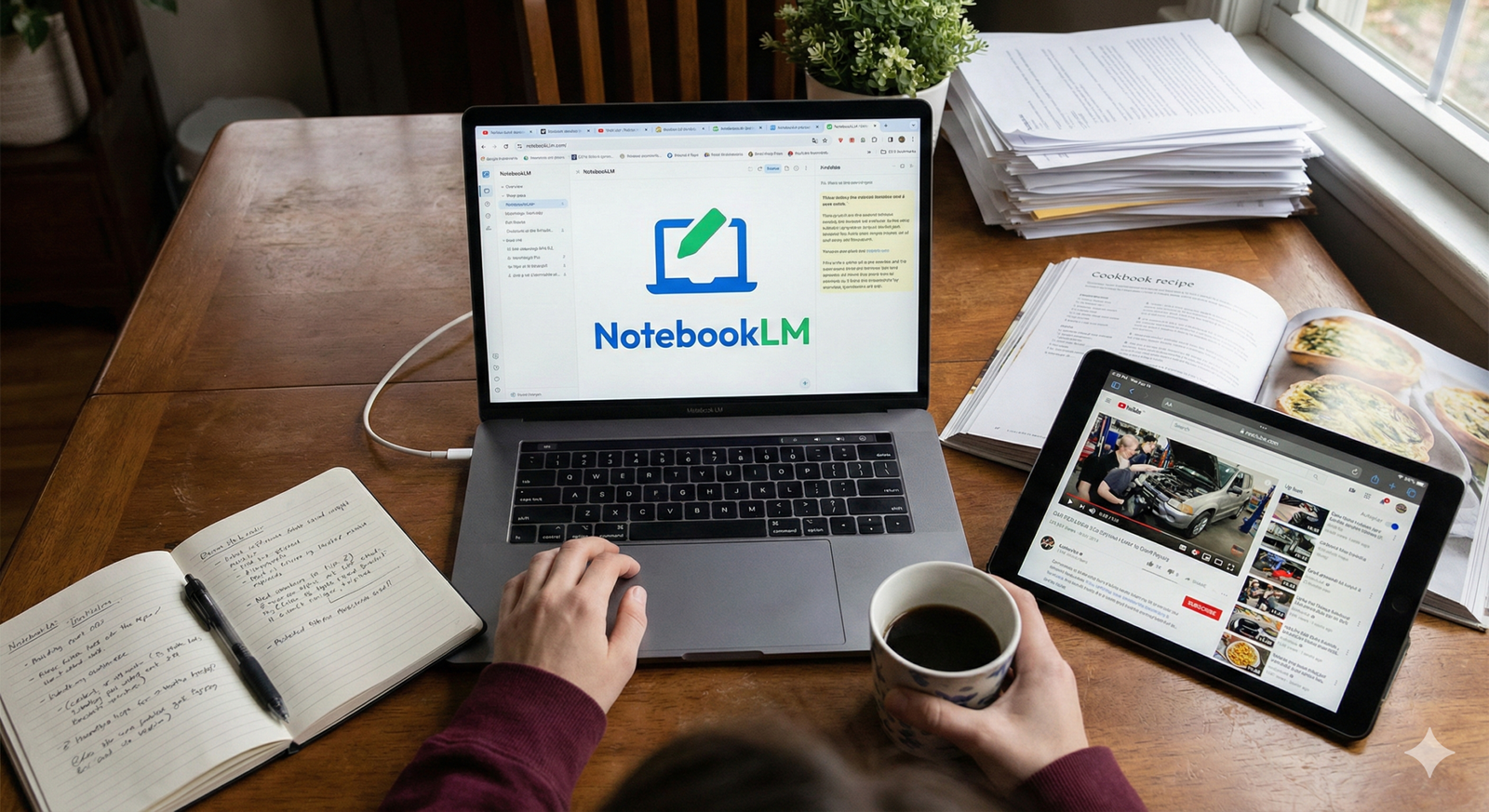
Imagine you are standing at the very bottom of a mountain made entirely of printer paper, and someone just told you that your car keys are hidden somewhere near the summit. That is exactly how it feels when you try to learn something new these days, because we are absolutely drowning in information while starving for actual, usable wisdom. We all have those browser tabs open that have been there since the last presidential election, mostly articles about “how to be more productive” that we are too busy to actually read. It is the ultimate irony of the modern age, where we have the sum of all human knowledge in our pockets, yet we mostly use our phones to look at videos of cats falling off of couches. If you are over thirty and feel like your brain is a hard drive that is 99% full of old song lyrics and the names of people you met once at a wedding, you are not alone.
Have you ever wished you could just hire a personal assistant who has already read everything for you and is waiting to give you the CliffsNotes version while you sip your morning coffee? That is the exact vibe of NotebookLM, and it is honestly the closest thing we have to a “magic wand” for our brains in 2026. Think of it like a digital librarian who never gets tired, never tells you to “shhh,” and actually understands why you are confused about how a carburetor works. It is a tool that takes all those messy documents, long YouTube videos, and dry articles and turns them into a neat little package of knowledge that actually makes sense to a normal human being. You don’t need a degree in computer science to use it, you just need a desire to stop wasting your time staring at a blinking cursor while your coffee gets cold.
But this isn’t just a tool for people sitting in ergonomic chairs in high-rise offices trying to climb the corporate ladder. What if you want to learn how to fix your own car because the local mechanic quoted you a price that sounded like the down payment on a house? You can upload the digital version of your car manual and a few videos on how to change spark plugs, and then just ask the notebook where the “thingy” is located. Instead of scrolling through 400 pages of diagrams that look like a secret code, the AI points you directly to page 42 and tells you exactly which wrench you need to go find in the garage. It takes the “ugh” out of learning a manual skill and replaces it with a “huh, that was actually easy” moment.
Maybe you have a dream of cooking like Bobby Flay but your current skill level is closer to “burning water” or “making the smoke alarm go off”. You could take a dozen of his recipes and his best techniques, put them in a notebook, and ask it for a step-by-step summary that doesn’t involve you having to pause a video every five seconds with flour-covered fingers. You could ask it to compare three different ways to make a sauce and tell you which one is the fastest for a Tuesday night when you have exactly twenty minutes before the kids start a mutiny. It becomes your sous-chef, keeping all the complicated details organized while you focus on not setting the kitchen on fire.
The same logic applies if you want to hit the gym and finally start training with the intensity of Jose Zavala (https://www.instagram.com/mayan_saiyan), the “Mayan Saiyan” himself. You could upload his training philosophies, his workout clips, and his nutrition advice into your notebook to create a personalized fitness guide. Instead of scrolling through Instagram for hours and getting distracted by memes of weightlifters making funny faces, you can just ask your notebook for a summary of his leg-day routine. It is like having a world-class trainer in your pocket who explains how to move like a pro without using words that require a medical degree to understand. You get the CliffsNotes for his entire training system, which means you can spend more time lifting and less time looking at your phone in the weight room.
Why do we spend so much time fighting with our technology when it is supposed to be the thing that saves us time? We often treat our computers like they are these mysterious, moody boxes of magic, but really, they should just be the shortcut to where we want to go in our lives. NotebookLM acts as that ultimate shortcut, especially when you use the “Deep Dive” audio feature that everyone is talking about lately. This is probably my favorite part of the whole thing because it takes your boring, dry notes and turns them into a conversational podcast. It is like having two very smart, very funny people sit down and explain your own research back to you while you are driving to pick up the kids or walking the dog.
Imagine listening to a ten-minute audio summary that covers everything you need to know for your big presentation while you are stuck in traffic. Instead of feeling stressed and behind, you arrive at the office feeling like the smartest person in the room because you just had a “briefing” from your digital team. This isn’t just a gimmick, it is a way to use our ears to learn when our eyes are too tired to look at another screen. It turns dead time into learning time, and it does it in a way that feels like entertainment rather than a chore.
The stats from Google actually show that this kind of repeated exercise and multi-sensory learning helps you retain information much faster than just staring at a page. It is about moving from “passive scrolling” to “active learning,” where you are actually engaging with the material instead of just letting it wash over you like a wave. When you use the tool to quiz yourself on what you just read, your brain starts to build those memory connections much faster. It is the difference between watching a movie once and actually being able to quote all the best lines to your friends a week later. NotebookLM even lets you generate study guides and flashcards automatically, which makes you feel like you have a tiny, genius tutor living inside your laptop.
Think about how much time we waste every single week just looking for the right information that we know we have “somewhere”. We spend twenty minutes searching through emails or looking for that one article we saw on Facebook three weeks ago that we thought was life-changing. With this tool, everything is in one central place, organized and ready for you to ask a question. It is like an external hard drive for your brain that actually knows how to organize itself while you are busy doing other things like sleeping or binge-watching a new show on Netflix. You don’t have to be a “techie” to appreciate the beauty of a clear mind and a desk that isn’t covered in a blizzard of sticky notes.
I have found that the absolute best way to use this is to think outside the box and use it for things that have nothing to do with your job. You could use it to plan a complicated family vacation by uploading travel blogs, flight schedules, and hotel reviews to find the best deals without losing your mind. You could use it to understand a new medical diagnosis by feeding it trusted articles from real doctors so you can ask the right questions during your next appointment. You could even use it to keep up with your kids’ hobbies so you actually know what they are talking about when they mention some new game or a trend that sounds like a foreign language. It is a universal translator for a world that is getting more complicated by the second.
It really is the CliffsNotes for your entire life track, helping you get from point A to point B without all the unnecessary detours. Whether you are aiming for a big promotion or just trying to master the perfect steak on a charcoal grill, the goal is the same: get the knowledge into your head as quickly as possible. We don’t have time for the fluff and the academic jargon that people use to make themselves feel important. We just want the good stuff, the useful stuff, and the stuff that makes our lives a little bit better tomorrow than they are today.
As we move further into 2026, these tools are only going to get more helpful and more intuitive. We are already seeing features that can create interactive mind maps or suggest important things you might have missed in your own research. It is like having a coach who is always looking over your shoulder, making sure you are seeing the big picture instead of getting lost in the weeds. And the best part is that you are still the one in the driver’s seat. You choose the sources, you ask the questions, and you decide what information actually matters to you and your family.
So, the next time you feel that familiar wave of panic when looking at a new project or a new hobby, just remember that you don’t have to climb that mountain of paper all by yourself. Grab your digital librarian, throw your sources into a notebook, and let the AI do all the heavy lifting for a change. You might find that you actually enjoy the process of learning again, once you get rid of all the boring parts that used to stand in your way. Life is too short to spend it feeling confused by your own computer, so why not take the shortcut and see how much further you can go?
If you found this helpful and you are ready to stop drowning in a sea of open tabs and start actually knowing things, I would love to hear about your experience! Tag me @iamcezarmoreno on social media and tell me the weirdest or coolest thing you are currently learning with the help of NotebookLM. For more tips on making technology work for you instead of the other way around, you should definitely join the crew over at https://cezarmoreno.com. I send out regular updates that are short, sweet, and strictly jargon-free, designed to help you stay ahead without the headache.